活动2026︱第十七届“安徽大学—《英语世界》杯”翻译大赛启事
2026-04-15作者:英语世界新闻来源:商务印书馆浏览人次:1357
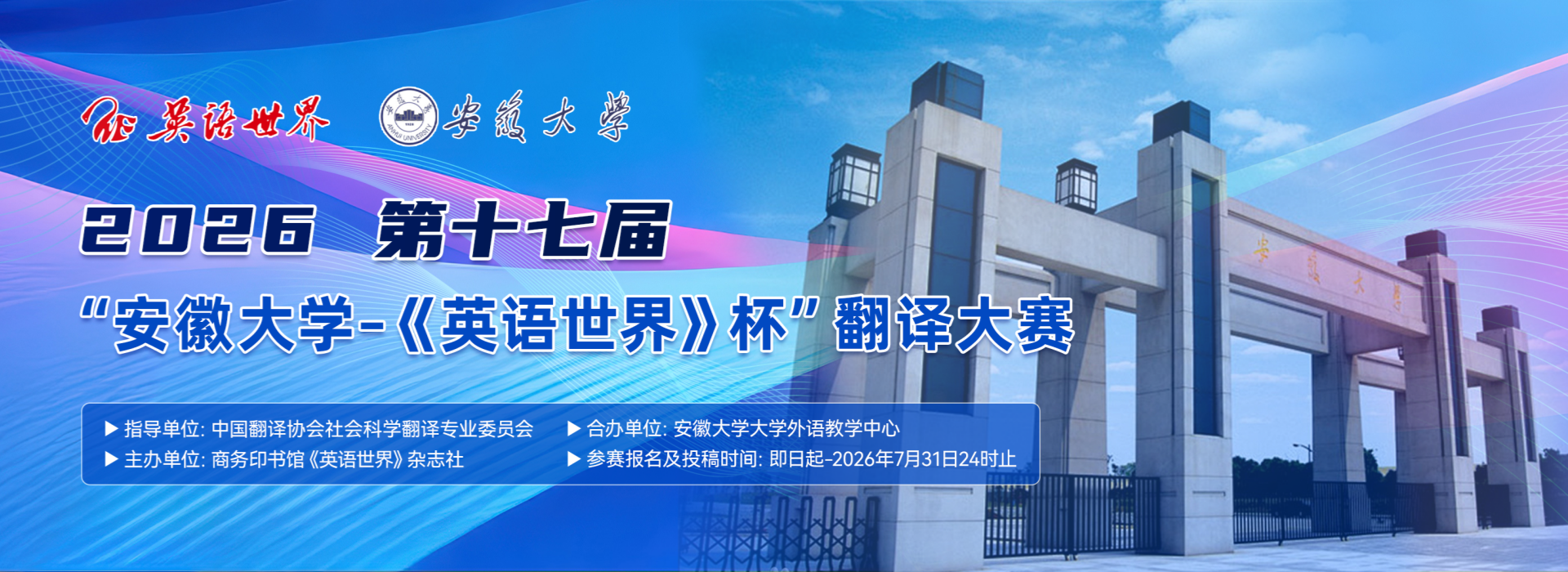
“《英语世界》杯”翻译大赛肇始于2010年,由商务印书馆《英语世界》杂志社主办。多年以来,赛事吸引众多翻译爱好者参与,广受译界关注,目前已经成为国内最有影响力的翻译赛事之一。为推动翻译学科发展,促进中外文化交流,我们秉承“给力英语学习,探寻翻译之星”的理念,于2026年继续举办第十七届“《英语世界》杯”翻译大赛,诚邀广大翻译爱好者积极参与,比秀佳译。
第十七届“《英语世界》杯”翻译大赛得到安徽大学的大力支持,并由该校冠名本届比赛。今年的翻译大赛包含“英译汉”和“汉译英”两个组别。大赛初评由合办院校及《英语世界》编辑部负责;复评和终评将延续历届传统,从全国各地邀请知名翻译专家进行评审,以确保大赛评审的权威性和公信力。
指导单位
中国翻译协会社会科学翻译专业委员会
主办单位
商务印书馆《英语世界》杂志社
合办单位
安徽大学大学外语教学中心
协办单位
中国英汉语比较研究会英汉翻译研究学科委员会、重庆翻译学会、广东省翻译协会、河南省翻译协会、湖北省翻译理论与教学研究会、江苏省翻译协会、山东省翻译协会、陕西省翻译协会、四川省翻译协会、浙江省翻译协会、安徽省外国语言文学学会、中国外文局CATTI项目管理中心、全国商务外语翻译考试(BETT)办公室、成都市对外科技交流协会、《外语与翻译》编辑部、英文巴士网、赛氪、我爱竞赛网等。
赛程及评审
1. 大赛启事及原文2026年4月通过网络媒体发布,并刊载在《英语世界》2026年第5期杂志上。获奖结果2026年10月通过网络媒体发布,并刊载在《英语世界》2026年第11期杂志上。网络媒体包括《英语世界》网站(yingyushijie.com)、《英语世界》微信公众平台(微信号:theworldofenglish)、《英语世界》微博(weibo.com/theworldofenglish)、安徽大学大学外语教学中心网站(dw.ahu.edu.cn)、商务印书馆网站(cp.com.cn)、英文巴士网(en84.com)等。
2. 参赛投稿截止时间:2026年7月31日24时。
3. 大赛各项最新进展将通过《英语世界》微信公众号实时发布,请予关注。
参赛要求
1. 参赛者国籍、年龄、学历不限。
2. 参赛译文须独立完成,不接受合作译稿。
3. 只接受通过报名网站提交的投稿,稿件格式参看下文“投稿规范”。
4. 在大赛截稿日之前,请妥善保存参赛译文,勿在报刊、网络等任何媒体上以任何方式公布,违者取消参赛资格并承担相应后果。
5. 参赛译文一经发现抄袭、与其他译文雷同、采用机器翻译或院校集体辅导参赛等,即取消涉事者参赛资格。
6. 参赛者报名缴费即视为其本人同意和自愿遵守本启事的各项规定。
奖项及证明
1. 为提高声誉和水平,维护奖项含金量,大赛力避滥发奖项。“英译汉”和“汉译英”每组拟分别设置一等奖、二等奖、三等奖及优秀奖若干名。
2. 一、二、三等奖颁发证书、奖金和奖品,优秀奖颁发证书和奖品。
3. 所有获奖者均获赠《英语世界》数字刊一年会员权益,并有机会受邀试译,水平达标者将成为《英语世界》的译者并有机会在杂志上发表译文。
4. 积极组织学生参加翻译大赛的院校将有机会成为“《英语世界》翻译实践基地”合作单位。
5. 入围复审名单的参赛者,可向本社编辑部申请开具“入围复审”的书面证明。
报名及缴费
1. 为支付较高的评审成本、提高奖励额度、遏制少数人敷衍投稿的行为,本届大赛酌情收取不至给参赛者造成较大负担的参赛费,以保障大赛良性开展。恳请参赛者理解。
2. 单独参加“英译汉”或“汉译英”其中一项比赛缴纳参赛费人民币50元,两项均参加缴纳参赛费人民币100元。
3. 报名缴费流程:关注我刊微信公众号(搜索theworldofenglish,或扫描下方二维码),点击菜单栏“大赛报名”登录本届大赛报名网站,根据提示填写报名信息并缴纳参赛费。

4. 报名后没有成功缴费的,所投稿件无法进入评审程序。
5. 因人力所限,缴费后无论是否提交参赛译文,参赛费概不退还,缴费时务请注意。
投稿规范
1. 大赛报名网站缴费成功后,按网站指示提交参赛译文。
2. 提交文件中只能包含一版译文,且不能含有任何个人信息,否则匿名评审过程中将被提前淘汰。
3. 网站提交成功后,请务必再将个人信息表及参赛译文于截稿日之前以附件形式发送至大赛邮箱:yysjfyds@sina.com 。(特别提示:参赛资格确认及稿件评审以网站提交译文为准,邮箱仅用于参赛者信息及投稿备份。)
4. 邮件主题:参赛者姓名+个人信息及参赛译文。
5. 个人信息表:文件名“参赛者姓名+报名手机号末4位+个人信息”,Excel格式,附件发送,项目如下:

6. 参赛译文:文件名“参赛者姓名+报名手机号末4位+英译汉”或“参赛者姓名+报名手机号末4位+汉译英”,Word格式,附件发送;同时参加两项比赛,请发送两个Word附件,请勿合并成一个文件。
7. 参赛译文格式:宋体(英译汉)/Times New Roman(汉译英),黑色,小四号,1.5倍行距,两端对齐。译文每段之前请务必按原文顺序添加编号【1】【2】【3】……(如原文所示)。
评审保障制度
为保证大赛评审的公平、公正和透明,尽量保证评审结果的客观公允,本届大赛在评审过程中特别设立以下制度:
1. 合办单位回避制度:合办院校本校参赛稿的初评概由《英语世界》编辑部负责评审,而不交由合办院校本校教师评审。
2. 申诉复活制度:初评后的拟定复审入围名单通过《英语世界》微信公众号发布后,未能进入该名单的参赛者7日内有权提出申诉。提出申诉需另交150元的二次评审费用,申诉稿将邀请三位外部专家独立负责二次评审;二次评审发现确属初评失误的,将退还二次评审费用,否则费用不予退还。大赛会根据申诉稿二次评审结果重新公布最终的复审入围名单。
联系方式
为办好本届翻译大赛,特成立大赛组委会,负责整个大赛的组织、实施和评审工作。组委会办公室设在《英语世界》编辑部。
大赛咨询
关注英语世界微信服务号“英语世界网”(搜索微信号yingyushijie1981,或扫描下方二维码)。

《英语世界》杂志社
2026年4月
英译汉原文
On Beauty and Its Opposite:
Writing Toward Aesthetic Force
(Excerpt)
By Matthew Clark Davison and Alice LaPlante
【1】True beauty in literature isn’t ornamental. It isn’t a lyrical flourish on the surface of pain, or a reward for rendering trauma with the right degree of humility. It’s what Sarah Lewis, in The Rise, calls “aesthetic force”—a quality that stuns, alters, destabilizes, and lodges itself in our memory not because it comforts us, but because it insists that we see something differently than before. In writing, as in life, the beautiful often travels with its opposite.
【2】In our classes and in our forthcoming book from W. W. Norton, The Lab: Experiments in Writing Across Genre, we’ve noticed students eager to portray darkness—pain, trauma, disillusionment—thinking that to be serious is to be bleak. That’s believing that a dark piece has to be dismal in both what happens (catastrophes!) and language. But what’s more difficult, and often more powerful, is finding beauty in that darkness. We’re not talking about tidy catharsis or moral uplift. We’re talking about work that engages readers in contradiction and shows them something previously invisible, even if they don’t want to see it.
【3】Lisa Bellamy’s poem “Thank You for the Tulips,” highlighted as an example in The Lab, does just that. The poem’s speaker, a mother, receives flowers from her adult daughter. The occasion is seemingly benign. But Bellamy uses this gentle gesture to open a torrent of confession: “I am sorry I was a drunk when you were a kid… I am sorry you fell out of your stroller when you were a toddler because I was hungover and forgot to buckle you in.” The tulips—a conventionally beautiful image—anchor the poem. But the force comes from the interplay of image and admission. The speaker’s regret is so palpable that the reader, rather than recoiling, leans in.
【4】Beauty here isn’t a mask. It’s a lens. The images the poet uses: iridescent tulips, the daughter’s flecked eyes, the hipster vegan donuts—all emerge in relief against failures of care and memory. By the time the poem ends, “You were a delicious baby,” readers feel something like grace—not because the speaker is redeemed, but because we’ve been invited into the complexity of her love and guilt without being told what to think.
【5】This is an example of how we might think of aesthetic force as a generative tool in our creative writing. It’s not about what the piece claims, but what it does. And it’s something that often occurs—not in moments of resolution—but in the tension between what’s shown and what’s withheld.
【6】In a conversation at the New York Public Library with Anna Deavere Smith, Sarah Lewis described aesthetic force as something that slips past the gates of logic and hits us emotionally before we can explain why. That’s what happened when an Apollo 8 astronaut turned his camera back toward Earth and captured Earthrise. It wasn’t just a technical marvel. The photo of the blue sphere awed those who saw it, moved them beyond the thinking mind, and stunned them with its floating blue display of our planet’s glory and fragility. Historians say the image helped launch the first Earth Day.
【7】In literature, that same force can arrive through a perfectly placed image or an unexpectedly intimate moment. In Jeanette Winterson’s The Passion, the narrator speaks of gambling in a way that reads almost like theology: “We gamble with the hope of winning. But it’s the thought of what we might lose that excites us.” The voice doesn’t explain. It seduces.
【8】We often ask our students to go small—focus on an image, a gesture, a line of dialogue—and to let it bloom in meaning rather than pin it down. In one anonymous student piece, an arm severed in a school shooting is described as “the pink of a cherry blossom… a flower just starting to unfurl.” The horror is obvious. The beauty is unsettling. And that’s the point.
【9】When talking about the visual arts, Lewis says aesthetic force can make us gasp. In writing, aesthetic force can cause us to stop reading, close our eyes, hug the book to our chests and breathe. It sharpens our attention. And it reminds us, again and again, that a beautiful sentence doesn’t have to describe a beautiful thing. It just has to reconfigure the way we see.
【10】Our advice to writers? Find what dazzles you and describe it, even if (especially if?) it also frightens or disgusts you. Make the image clear. Resist easy resolution. And don’t underestimate the power of beauty—not as decoration, but as revelation.
汉译英原文
徽州心灵
文/赵焰
【1】对一个地方真正的了解,莫过于对“地方心灵”的研究了。研究“地方心灵”,最好的方法不是去图书馆,也不是去博物馆,而是应该真真实实地在当地生活,去认识那地方的人。探究那种沉积在当地人心理结构中的文化传统,探究传统与形成、塑造、影响心理结构和思维模式的关系,包括道德自律、人生态度、直观才能等;或者去关注当地人在文学、艺术、习俗等文化现象中的表现,它包括整体的心理结构和精神力量,也包括地方伦理学和地方美学。这些才是“地方心灵”真正的东西。只有对一个地方的“地方心灵”真正明白了,才可以说是真正懂得了这个地方。这样的方法,是深入一个地方的唯一途径。
【2】一直以为徽州文化从根本上来说,是儒的。那是一种积极入世的精神,执着而实在,低调而倔犟。那种对仕途的追求、对成功的追求,以及为人处世的道德感和人情世故的平衡感,都可以说是这种文化的体现。再加上商业文化对徽州人的影响也比较大,使得徽州人更理性务实,为人精明,工于算计,人生的负重较多。但所有的东西都不是单一的,徽州人在表面精进的同时,深埋在进取心之下的,应该还有另外一层思想,那就是山水共融的愿望。
【3】一直在想,对于积极进取的儒学以及追求隐匿避世的道学来说,究竟哪一种更符合人类的本质呢?似乎两者都是,两者又是密不可分的。人类来自自然,又进化为社会。社会意味着竞争,而自然则是回归。在骨子里,每个人都带有亲近自然的回归愿望,这愿望是带有母性意味的。而同时,人在社会进程中又带有某种控制欲,带有明显的权力和控制意识,要求秩序,这样的意识也促进了“儒”的产生。这两种东西一直是相伴而生的。其实对于徽州人来说,“儒”的进取,是理性的,是社会的,是宗族的;而“道”则是个人的,是直觉的,是天然的,是油然于心的。儒和道,看似不相融,其实却是可以相融的。因为儒也好,道也好,它们都是人类情感和欲望的延伸,它们的源头都是人类最初的欲望和想法。儒与道更像是一艘船上的两把桨,儒是前行的保障,道则是平衡的杠杆。只不过这两者方式不一,到了一定的关口,分叉了,形成了两条河,各自有着自己的流向。而在本质上,它们却一直相缠相生着,它们是同一个事物的两个方面,是镜子的正面和反面。
(选自《思想徽州》,赵焰著,东方出版社,2006。标题为编者所加)
点击
↓↓大赛海报↓↓
即可进入报名页面
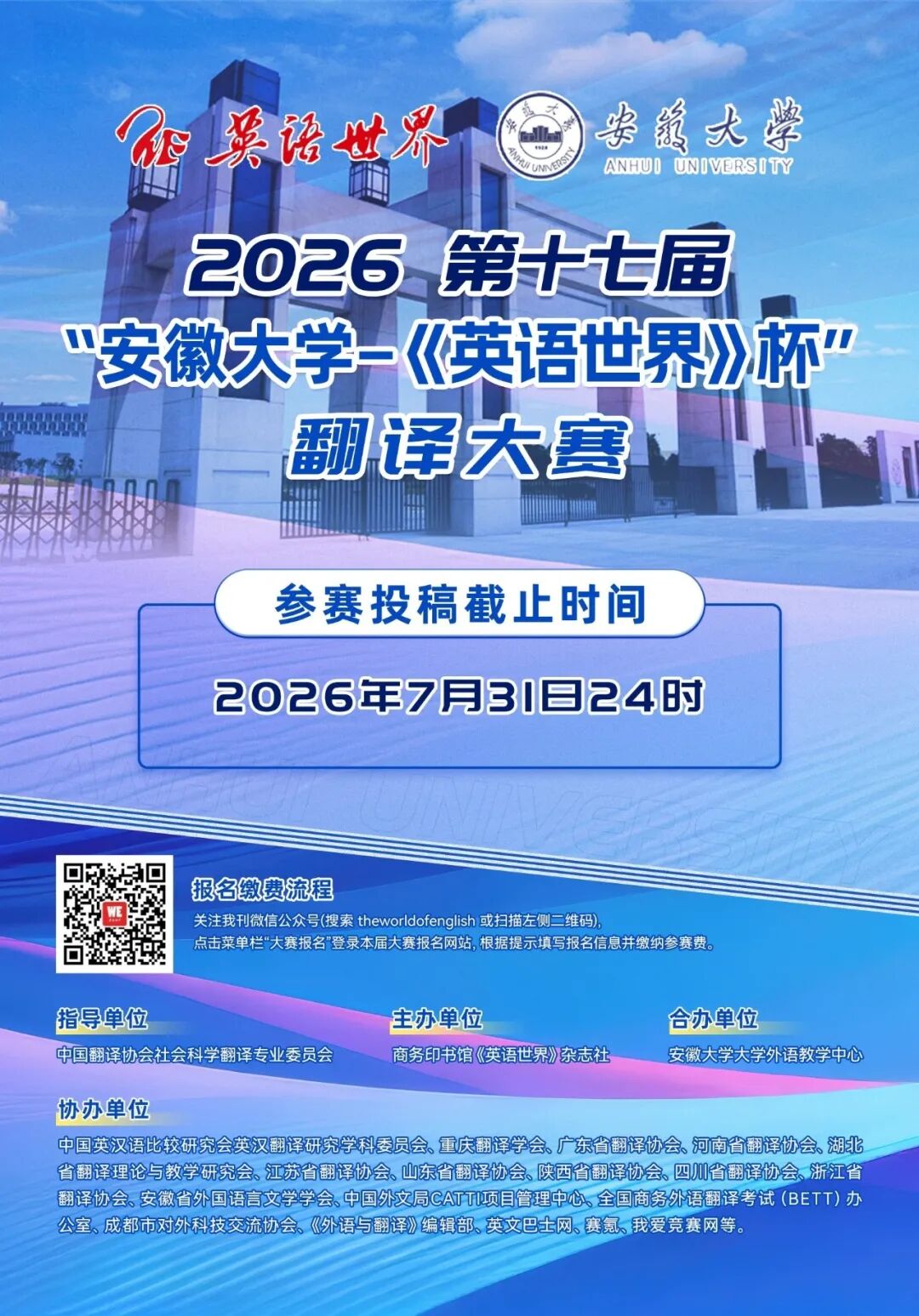
(提示:报名页面有链接下载英译汉原文、汉译英原文及个人信息表)
↓↓大赛海报



京ICP备05007371号|京ICP证150832号| 京公网安备 11010102001884号 版权所有 2004 商务印书馆
地址: 北京王府井大街36号|邮编:100710|读者邮箱: swysg_duzhe@cp.com.cn
产品隐私权声明 本公司法律顾问: 北京市万慧达律师事务所王宇明律师
